
Jacksonville guides · Business security
Panic Bar Repair in Jacksonville: Why the Exit Door Won't Latch
Most panic bar repair is an adjustment, not a new device: the latch has drifted out of line with its strike, the door has sagged, the vertical rods have slipped, or the closer no longer pulls the door shut hard enough to latch. A technician can fix nearly all of that at the door in one visit, keeping the device you already own. While you wait, never chain, padlock or wedge an exit door, because it has to open from the inside without a key, a tool or special knowledge.

By We Do Locksmith Jacksonville · Jacksonville shop, 8727 Old Kings Rd S
· 10 min read

Panic bar not working? Start with what the door is doing
Exit doors fail in a handful of ways, and each points to a different part. Before you call, open and close the door a few times and watch where the latch hits, whether the bar comes back up and whether the door finishes closing.
Our commercial locksmith service in Jacksonville fixes and fits Von Duprin, Detex and other exit devices, and tunes door closers so doors latch. Tell the dispatcher what the door does and which brand is printed on the bar, and send a photo if you can.
- The door swings shut but does not latch: the strike, the hinges, the rods or the closer.
- The bar sticks down or will not spring back: wear or damage inside the device.
- The key outside turns but the latch stays put: the cylinder or the trim.
- The alarm will not stop: the device's switches, battery or bolt.
- The door slams, crawls or stops short: the closer.
Rim, vertical rod or mortise: which exit device is on your door
Panic hardware, also called an exit device or push bar, is a latch that lets go when someone pushes toward the exit. Von Duprin notes the touchpad or crossbar you push has to span at least half the door's width. For a repair, what matters is where the latching happens:
- Rim device: the latch sits in the bar's center case and catches a strike on the frame. Allegion calls it the simplest configuration and the easiest to maintain.
- Surface vertical rod: rods run up and down the face of the door to latches at the top and the bottom. You see these on pairs of doors.
- Concealed vertical rod: the same idea with the rods, or on some models cables, hidden inside the door, where adjustment means working inside the door's edge.
- Mortise device: the bar works a lock body mortised into the door's edge, so the latch comes out of the door rather than the bar.
The door won't latch, or only latches when you slam it
A latch that misses its strike is the most common exit door complaint, and the cause is often the door rather than the device. Hinge screws loosen, a heavy door sags, and the latch starts landing low or catching the lip of the strike.
Detex's manual for its alarmed exit lock has owners check that the door opens easily, does not bind on the frame or threshold, and has not sagged or warped. That check suits every exit door.
The fix is usually tightening the hinges and resetting the strike, then checking the closer. A closer set too gently never drives the latch home, and a door that only latches when shoved gets left unlatched at closing.
Vertical rods bent, dragging or out of adjustment
On a vertical rod device, the top latch runs the show. Allegion's knowledge center explains that when the door is open the top latch should stay retracted and hold the bottom latch up off the floor.
When the rods are out of adjustment, or the top latch's hold-back part has failed, the bottom latch drops while the door is open and drags or snags. Allegion lists rod adjustment first among the causes.
A rod hit by a cart or a pallet jack can bend. A bent rod is replaced, a slipped one is reset to the maker's procedure, and the door is cycled until both latches catch every time.
The push bar sticks or won't spring back
A bar that stays down, sticks halfway or feels gritty is a device problem. Detex's manual has owners remove the cover and check for dirt build-up and for smooth movement of the bar, bolt and cylinder.
Don't spray just any lubricant into an exit device. Makers say what their hardware takes, and Detex names the only two lubricants it allows on its alarmed exit lock.
A bent bar or a cracked center case usually means new parts or a new device, and the technician explains which on the spot.
Dogging won't hold, and why a fire door can't be dogged
Dogging holds the latch retracted so the door works as a plain push-pull door during business hours. On Von Duprin devices it is set with a hex key or a key cylinder, and an optional indicator shows whether the device is dogged.
When dogging will not hold, something in the device is worn or out of adjustment. That repair is worth doing, because staff who cannot dog a door tend to prop it open instead.
Fire doors follow a different rule. Fire exit hardware is panic hardware also tested for fire doors, and it has no mechanical dogging, because a fire door must latch every time it closes. A label on the door says it is to be equipped with fire exit hardware.
To keep a fire door unlatched during the day, the accepted route is electric latch retraction, with the latch projecting automatically when the fire alarm goes off. That is wiring work, planned with your fire alarm company through our access control and electrified hardware service.
The outside key or trim won't retract the latch
Some exit doors are exit-only, with nothing outside. Others carry trim so staff can get in: a cylinder, a pull with a cylinder, or a lever. When the key turns outside but the latch stays put, the fault is in the link between the trim and the device.
Detex's manual describes the classic case on its alarmed exit lock: the key turns, but the cylinder's tailpiece was cut too short and has slipped out of the cam. The cure is a new tailpiece or cylinder, not more force on the key.
A worn cylinder is a lock repair job, and when keys to that door left with a former employee, a lock rekey costs less than new hardware. On a building with many doors, a master key system gives the owner one key for everything.
An alarmed exit device keeps sounding
Alarmed exit devices guard secondary exits: the door still opens with a push, but it sounds an alarm. On a Detex ECL-230D, a common battery-powered model, turning the key to throw the bolt arms the unit, and pushing the paddle retracts the bolt and sets off the siren.
If the siren keeps sounding after it is reset with the key, Detex's manual has the unit opened and the switch levers inside checked for damage; a siren that never sounds points to the battery or its wires. A key that is hard to turn with the door closed, yet turns freely with the door open, means the bolt and the keeper are out of line.
Detex asks owners to run a short operating test weekly and log inspections. Never pull the battery or tape over the siren for some quiet; that disables the device, and the real fix is usually a battery, a keeper adjustment or a part.
Door closers: when the door slams, crawls or never latches
The closer brings the door back, and its last few inches decide whether the latch catches. A surface closer such as LCN's 1000 series sets the general closing speed and the latching speed separately, and an adjustable backcheck cushions a door that is thrown open.
A closer that slams or crawls is often just out of adjustment, and a technician resets the valves in small steps until the door closes smoothly and latches. Allegion's knowledge center is blunt about the other case: once a closer has lost oil, nothing will make it work correctly, and it has to be replaced or rebuilt at the factory.
Oily streaks on the closer or the floor under it are the sign. On a fire door, a closer that cannot close and latch the door is a code problem, not just a nuisance.
What Florida's fire code asks of an exit door with panic hardware
The Florida Fire Prevention Code adopts NFPA 101, the Life Safety Code, by rule in the Florida Administrative Code. Allegion notes that local codes vary and that the local authority can require panic hardware wherever it judges life safety needs it.
The core rule is simple. OSHA's workplace rules say employees must be able to open an exit route door from the inside at all times without keys, tools or special knowledge, and that exit doors must be free of any device or alarm that could block emergency use if it fails. These are the points that matter most for repairs:
- Panic hardware where the code calls for it. Allegion's code summary lists latched exit doors serving assembly, educational and day care occupancies of 100 or more people under NFPA 101, and the building code can set a lower trigger.
- No chain, padlock, hasp or extra deadbolt on a door required to have panic hardware, and nothing that stops the bar from releasing the latch. Delayed and controlled egress systems are the recognized exceptions.
- A panic bar that locks only from the outside is allowed on exit discharge doors.
- Fire exit hardware, never plain panic hardware, on a fire-rated door, with no mechanical dogging.
Repair or replace, and what panic bar installation involves
Repair makes sense when the device suits the door, parts are still made and the bar is straight. Replace when the bar is bent or cracked, parts are gone, or the device is wrong for the opening: plain panic hardware on a fire door, a bar spanning less than half the door's width, or one that cannot add an alarm or electric latch retraction you now need.
For panic bar installation, Von Duprin lists what decides the device: codes (fire, accessibility, hurricane ratings), the opening's size, the door's material and stile width, looks, and special features. Price follows that list plus the number of doors, and you hear a free estimate by phone and agree the final figure at the door before any work.
The shop is at 8727 Old Kings Rd S in Brierwood Village Plaza on the Southside, near the I-95 and University Boulevard exit, open 8 am to 8 pm every day. Technicians come in marked vans and show ID, and standard cylinder keys are copied at the counter while you wait. See what Jacksonville customers say on our reviews page, and ask about the military discount.
Jacksonville exit doors: storms, strip plazas, warehouses and churches
Allegion notes that some jurisdictions require doors and hardware to pass hurricane testing, so a replacement on a windstorm-rated opening should carry a matching rating. We read the door and frame labels before ordering.
Before a named storm, walk every exit door: each should close on its own, latch, and open with one push. If one fails after hours, don't bridge the night with a chain; call when the shop opens at 8 am. Around Jacksonville, these calls come up again and again:
- Strip plazas along Beach Boulevard, Baymeadows Road and Blanding Boulevard pair a glass front door with a steel back door that nobody checks until it fails.
- Westside and Northside warehouses run double doors with vertical rods, where carts, pallet jacks and dock grit wear on the bottom latches.
- Churches and schools: assembly rooms and classrooms are where panic hardware is most often required, and a full Sunday service or a fire drill is the worst moment to find a sticking bar.
Who wrote this guide
We Do Locksmith Jacksonville
8727 Old Kings Rd S, Jacksonville, FL 32217
The Jacksonville shop of We Do Locksmith, a Florida locksmith company founded in Tampa in 2016. Dispatchers answer 8 am to 8 pm, every day, and the technicians who do the work are background-checked, insured and bonded, and arrive in marked vehicles with ID. Our reviews are public on our Google profile, linked below.
How we write these guides. Each one is built from the questions Jacksonville callers ask our dispatchers and the jobs our technicians do every day. Anything legal points to the official source, no guide quotes a price that could change on your driveway, and every revision is dated at the top.
About usJacksonville reviewsOur Google profile
Sources
- Florida Administrative Code, Rule 69A-60.004: NFPA 101, the Life Safety Code, adopted as part of the Florida Fire Prevention Code
- OSHA, 29 CFR 1910.36: Design and construction requirements for exit routes
- Von Duprin (Allegion): Von Duprin 101, Exit Devices
- Allegion Industry Insights: Back-to-basics, Panic hardware
- Allegion Knowledge Center: What would keep a vertical rod exit device's top latch from being held retracted?
- Allegion Knowledge Center: What would cause a door closer to slam?
- LCN (Allegion): 1000 Series surface mounted closers, catalog section
- Detex: ECL-230D and ECL-230D-PH panic hardware device, owner's inspection and maintenance manual
General information, not legal advice. Car systems and local rules change, so the dispatcher confirms what applies to your car, lock or door on the call. If a child or a pet is locked in a car, call 911 first.
Questions this guide gets asked
Can a panic bar be repaired, or does it need replacing?
Most can be repaired. A door that will not latch usually needs the hinges, strike, rods or closer adjusted, and worn parts such as cylinders can be swapped. Replacement is for a bent or cracked device, one with no parts left, or one that is wrong for the door.
Is it legal to chain or padlock an exit door?
No. Exit doors must open from the inside without a key, a tool or special knowledge, and a door required to have panic hardware may not carry a chain, padlock, hasp or extra deadbolt. If a door will not secure, have the device repaired instead.
Can you dog a panic bar on a fire door?
No. Fire exit hardware has no mechanical dogging, because a fire door must latch every time it closes. Holding the latch back is allowed only electrically, and the latch must project again automatically when the fire alarm or smoke detection system activates.
Why won't my push bar door latch?
Usually the door has sagged, the strike has moved, the vertical rods are out of adjustment or the closer is too weak to finish closing the door. A technician checks the door, then the closer, then the device itself.
Which exit device brands do you work on in Jacksonville?
We work on Von Duprin and Detex devices, other exit device brands and door closers all over Jacksonville. Read the brand off the bar when you call, and the phone estimate costs nothing.
Keep reading
More guides from Jacksonville
Home security
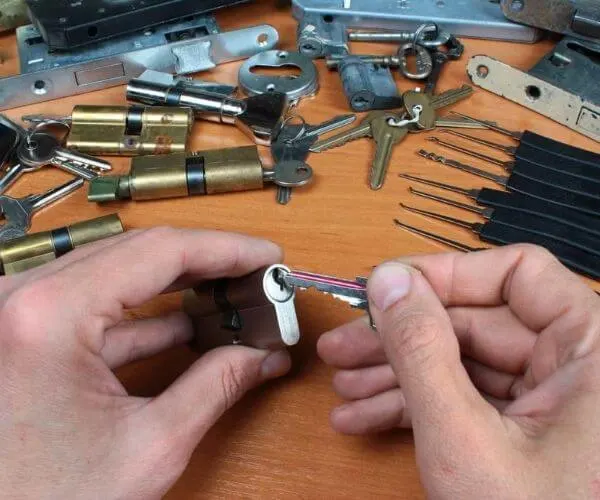
How to Get a Broken Key Out of a Lock Without Making It Worse
How to get a broken key out of a lock: what is safe to try yourself, what jams it deeper, and when a Jacksonville locksmith takes over.
November 10, 2026 · 10 min read
Read the guide
Consumer protection
How to Spot a Scam Locksmith Before They Arrive
Bait prices, unmarked cars, and 'it has to be drilled.' Learn the warning signs and how to check a real Jacksonville locksmith.
September 6, 2026 · 9 min read
Read the guide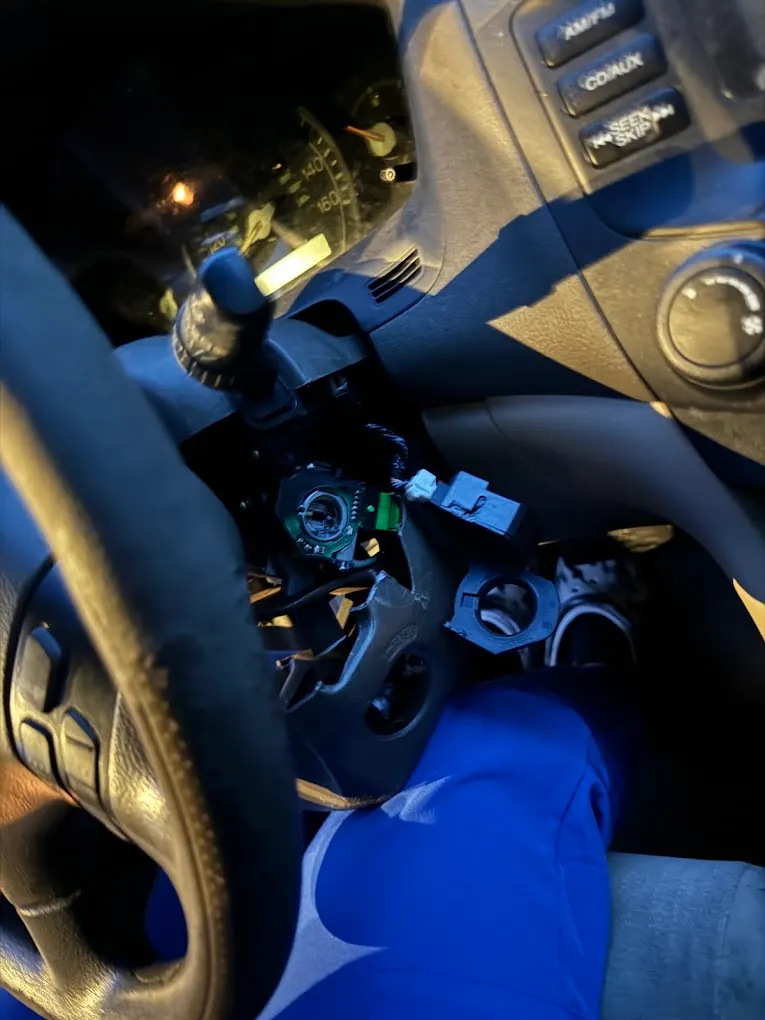
Car keys
Key Stuck in Ignition? Safe Fixes and When to Call a Locksmith
Key stuck in ignition or won't turn? Safe fixes for a locked wheel, the Park interlock, a weak battery or a snapped key, in order.
November 10, 2026 · 10 min read
Read the guide


Locked out in Jacksonville? Talk to a person, not a call center.
Tell us where you are and what you drive or which door it is. The estimate on the phone is free, and a technician comes in a marked We Do Locksmith vehicle.