
Jacksonville guides · Home security
Door Won't Lock? How to Tell a Door Problem From a Lock Problem
When a door won't lock, the lock itself is often fine: try it with the door open, then shut, and if it only fails shut, the bolt is missing its hole in the frame. Usually that is because the door has dropped, swelled or shifted a fraction of an inch. This guide explains what each result means, the causes we find most at Jacksonville front doors, what you can safely adjust yourself, and when a broken part or a dead smart lock makes it a job for a technician.

By We Do Locksmith Jacksonville · Jacksonville shop, 8727 Old Kings Rd S
· 10 min read

The door-open test: lock or door?
Swing the door wide and leave it there. Turn the thumbturn and the key so the deadbolt shoots out and back several times, then press or turn the button on the knob or lever and check that the outside handle stops turning. Now close the door and try the same things.
Kwikset's support pages start their troubleshooting with exactly this comparison, and Kwikset adds one more question: does the bolt only go when you lean on or tug the door? Your answers sort the problem into one of three groups:
- Works open, fails closed: the lock is healthy and the bolt or latch is missing the strike. Read on through the alignment sections.
- Works closed only when you lean on, lift or pull the door: the same alignment fault, just milder.
- Fails with the door open too: something inside the lock is worn, broken or set up wrong. Skip ahead to the section on the lock itself.
Door won't lock because the bolt hits the strike
The strike plate is the metal plate on the frame with a hole for the bolt. When door and frame drift apart, the bolt lands on the edge of that plate instead of in the hole, and it stops short or refuses to move. Look for a bright scrape on the plate; it usually shows which edge is in the way.
If you can't see a mark, Schlage suggests smearing chalk or lipstick across the bolt's tip, then locking slowly so the smear shows where it touches. A bolt hitting low means the door has dropped; a bolt hitting the outer edge means something is holding the door away from the stop.
Small misses are fixed at the strike. The opening can be filed or chiseled a little, the plate moved, or, on Kwikset's guidance, the tab of the bottom strike plate nudged slightly so the door sits where the deadbolt lines up with its hole. Schlage notes that if the knob or lever latch also struggles, its strike may need moving too.
Why is my door misaligned all of a sudden?
A door that locked fine last month seldom moved all at once, but it can feel that way, because the last sixteenth of an inch is what tips it over. These are the usual triggers:
- Hinge screws working loose, especially at the top hinge, which carries most of the door's weight and lets the latch side sag.
- Summer humidity swelling a wood door or frame until the bolt binds.
- New, thicker weatherstripping that holds the door out from its stop.
- A hard slam, a kick or a storm gust that bent the strike or cracked the wood behind it.
- Fresh paint layered on the door edge, the stop or the strike.
- The house settling, which shows up first on older homes and on doors in long walls.
Sagging hinges and loose screws
Schlage blames worn or loose hinges for sagging doors. Open the door, grab the knob and lift gently. If the door rises and the hinge leaves move, the screws have let go. Tighten every hinge screw on the door side and the frame side.
A screw that spins without biting has stripped its hole. Swapping in a screw long enough to bite into the framing behind the jamb usually holds, and on the top hinge it often pulls the door back toward square. Schlage also lists shims behind a hinge leaf, and new hinges when the old ones are worn.
Then rerun the open and closed test. Plenty of doors that won't lock are cured right here, before anyone touches the lock.
A bolt pocket that's too shallow
Behind the strike plate is a hole bored into the frame. If it is shallow, the deadbolt slides out part of the way and then stops against wood, and the key or thumbturn won't finish its turn. It feels like a jammed lock, but the bolt has simply hit the back of the hole.
Schlage says the hole should be one inch deep so the bolt can extend fully without dragging, and Kwikset's support pages give the same one-inch minimum. A shallow pocket often turns up after a new deadbolt goes on an old frame, or a new frame goes in with a hole drilled for a different lock.
Door thickness matters too. Kwikset lists the thickness each smart deadbolt supports, and a lock fitted to a door outside that range can bind no matter how the strike is set.
Weatherstripping, paint and humidity: why it happens in summer
Schlage notes that changes in temperature and moisture can warp a door, so a door may lock easily in one season and fight you in another. In Jacksonville the hard season is summer, with heavy air and afternoon storms, and a door that closed with a nudge in winter can bind at the strike by July.
Wood doors and frames in older Riverside, Avondale and San Marco homes have been moving with the seasons for generations, and exterior doors near the ocean in Atlantic Beach and Neptune Beach take damp air every day. If the door is only tight in the wet months, adjusting the strike is usually wiser than planing the door, which can leave a gap once it dries out.
Weatherstripping is the other summer culprit. Both Schlage and Kwikset warn that strips that are too thick press the door off its stop and throw the bolt out of line. A new draft seal fitted for the rainy season is a common reason a lock suddenly stops catching.
If the lock fails with the door open
If the bolt or latch misbehaves with the door wide open, adjusting the frame won't help. The faults we meet most often:
- The key or thumbturn spins but the bolt doesn't move: a broken tailpiece, cam or drive bar inside the lock.
- The bolt moves only partway even in open air: a deadbolt set for the wrong distance from the door edge, or a worn bolt mechanism.
- The latch stays retracted or sticks: a tired spring in the latch or the knob.
- An old mortise lock in a historic house: worn internal springs and levers that need servicing, not a new door.
- A key that turns hard even while the door stands open: a cylinder problem, covered on our lock repair page.
Smart locks that report a jam
A motor has little strength to spare, so any rub at the strike and other alignment faults show up as jam errors, weak motors and batteries that drain fast. Kwikset's jam-error steps run through the top strike's hole depth, bending the bottom strike's tab, confirming the door thickness is supported, checking the weatherstripping, and loosening through-bolts that were overtightened during installation.
Its last check is a good test for any door: shut it from inside, then turn the thumbturn without leaning on the door. If the bolt goes home cleanly, the alignment is right.
One more cause is unique to electronic locks. Kwikset explains that if the door handing step was skipped at installation, the lock doesn't know which way the door swings and drives the bolt the wrong way. When batteries, alignment and handing all check out and the motor still won't work, the electronics have likely failed, and a new unit fitted by our smart lock installation team is the answer.
Knob locks that won't lock: the button doesn't catch
Knobs and levers lock differently from deadbolts. A push button or turn button on the inside sets a mechanism that stops the outside handle from turning. When you press it and the outside handle still opens the door, the problem is inside that knob set, not in the frame.
Common causes are a worn or broken locking piece in the knob, or through-screws that have loosened so the two halves no longer line up. On inexpensive builder-grade knobs, replacing the set often costs about the same as repairing it, and the new one can be keyed to your existing key.
A latch that won't hold the door shut is a separate fault. The small plunger beside many latches is there to stop the latch being slipped with a card, and it only does its job when the door closes snugly against the strike, so a gappy door undoes it.
Fix it, rekey it or replace it
Alignment faults are fixed, not replaced: hinges tightened or shimmed, the strike moved or reshaped, the pocket deepened. Broken parts in a solid lock can usually be swapped. Replacement makes sense when a cheap lock is worn throughout, salt has corroded it, parts are discontinued, or a smart lock's electronics are dead; a lock change handles that, often with a reinforced strike.
If the lock works again but you're unsure who has keys, rekeying retires the old keys without new hardware. Our guide to rekeying versus changing locks compares the two. Planing a swollen door, replacing a rotted jamb or rehanging a door is carpentry, and the technician will say so when that is what the door needs.
What not to do while the door won't lock
A few common fixes make things worse. Don't force the key or the thumbturn; a key snapped in the cylinder adds a second job, and our broken key guide explains why. Slamming the door so the bolt lines up loosens the hinges more each time. Don't file the bolt itself shorter, because a shorter bolt is easier to force.
And don't leave an exterior door that can't lock and walk away. Use another door, keep someone home, or call to have it secured.
Calling a locksmith in Jacksonville: when, and what the visit looks like
Call when the open-door test points at the lock, when hinge and strike adjustments haven't solved it, or when a smart lock keeps jamming. We pick up at (904) 578-7001 from 8 am until 8 pm, seven days a week, and the dispatcher will ask what the test showed, the brand of lock and whether the door is wood, steel or fiberglass.
The technician arrives in a van with our name on it and shows ID, then checks the whole opening: the door open and closed, the hinges, the strike, the pocket depth and the lock itself. You hear what is wrong and what it will cost before any work starts, building on the free estimate you got by phone. Our door lock repair page lists the hardware we service, and the residential locksmith page covers the rest of the house; there is a discount for service members and veterans.
Who wrote this guide
We Do Locksmith Jacksonville
8727 Old Kings Rd S, Jacksonville, FL 32217
The Jacksonville shop of We Do Locksmith, a Florida locksmith company founded in Tampa in 2016. Dispatchers answer 8 am to 8 pm, every day, and the technicians who do the work are background-checked, insured and bonded, and arrive in marked vehicles with ID. Our reviews are public on our Google profile, linked below.
How we write these guides. Each one is built from the questions Jacksonville callers ask our dispatchers and the jobs our technicians do every day. Anything legal points to the official source, no guide prints a price that could change on your driveway, and every revision is dated at the top.
About usJacksonville reviewsOur Google profile
Sources
- Schlage: Why won't my door latch? Warped doors, weatherstripping, strike alignment and hinges
- Kwikset Support: Premis bolt jams, short battery life or slow motor (door open and closed test, strike depth, door thickness)
- Kwikset Support: My smart lock is giving me a jam error
- Kwikset Support: SmartCode 909/910 latch bolt moves the wrong way (door handing)
General information, not legal advice. Car systems and local rules change, so the dispatcher confirms what applies to your car, lock or door on the call. If a child or a pet is locked in a car, call 911 first.
Questions this guide gets asked
What causes the door lock not to lock?
Most often the bolt or latch misses its hole in the frame because the door has sagged on loose hinges, swelled in humid weather, or been pushed out by thick weatherstripping. A shallow hole behind the strike does the same. If the lock also fails with the door open, a part inside it is broken or worn.
Why is my door misaligned all of a sudden?
The change usually built up slowly and crossed a tipping point. Loose top-hinge screws, summer swelling, new weatherstripping, fresh paint, a hard slam or the house settling can each move a door a fraction of an inch, and that is enough for the bolt to start hitting the strike plate instead of entering it.
What to do when a door lock is stuck?
Stop forcing it. A lock that sticks only when the door is shut is usually a bolt bound against the strike. Push, lift or pull the door gently while you turn to free it, then tighten the hinge screws and check the strike for scrape marks. Moving the strike or deepening the hole behind it is the lasting fix.
How to repair a door lock handle that won't lock?
First tighten the screws holding the two halves of the knob or lever together, since a loose set lets the locking parts slip out of line. If pressing the button still leaves the outside handle free to turn, the locking piece inside is worn or broken, and replacing the knob set is usually the practical fix.
Why does my deadbolt only lock if I push the door?
Pushing moves the door just enough for the bolt to clear the strike, so door and frame no longer line up. Snug up the hinge screws, check the weatherstripping, and look for scrape marks on the strike plate. If that doesn't do it, the strike needs moving or the hole behind it deepening.
Keep reading
More guides from Jacksonville
Home security
Rekey or Replace? How to Decide for Your Jacksonville Home
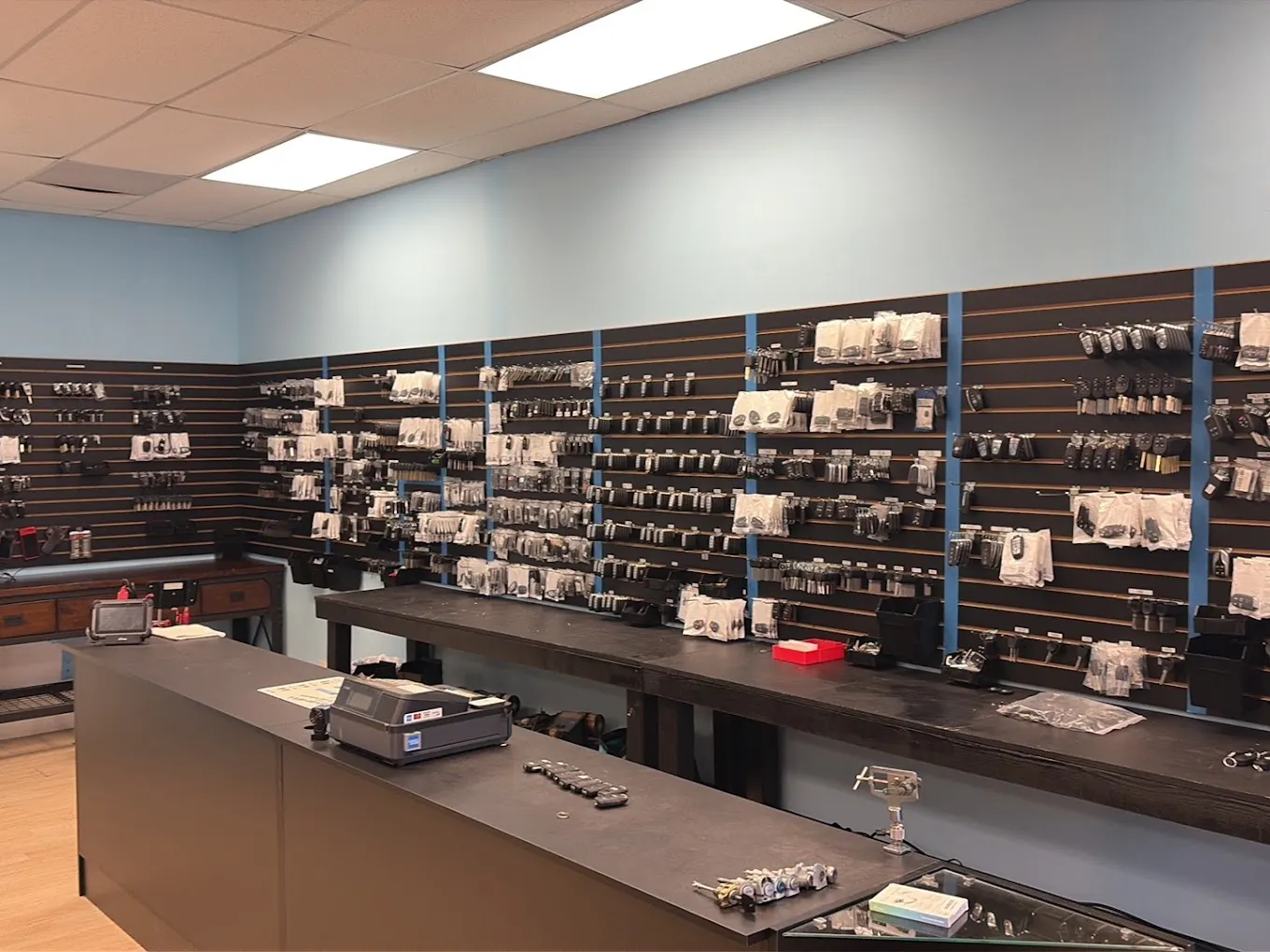
Rekeying keeps your hardware and kills the old keys. Replacing gets you new locks. Here is how Jacksonville homeowners choose.
September 3, 2026 · 9 min read
Read the guide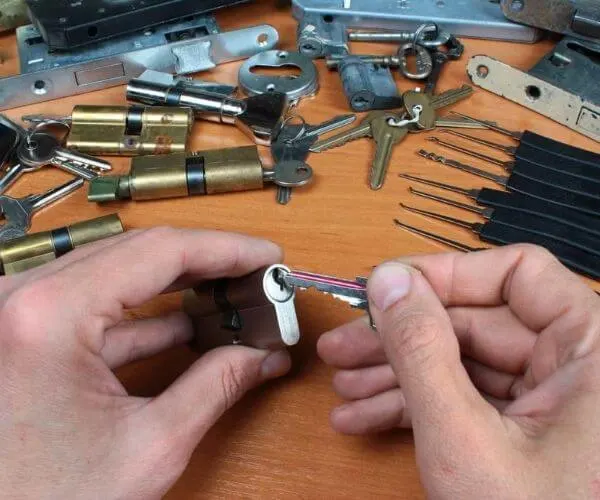
Home security
How to Get a Broken Key Out of a Lock Without Making It Worse
How to get a broken key out of a lock: what is safe to try yourself, what jams it deeper, and when a Jacksonville locksmith takes over.
November 10, 2026 · 10 min read
Read the guide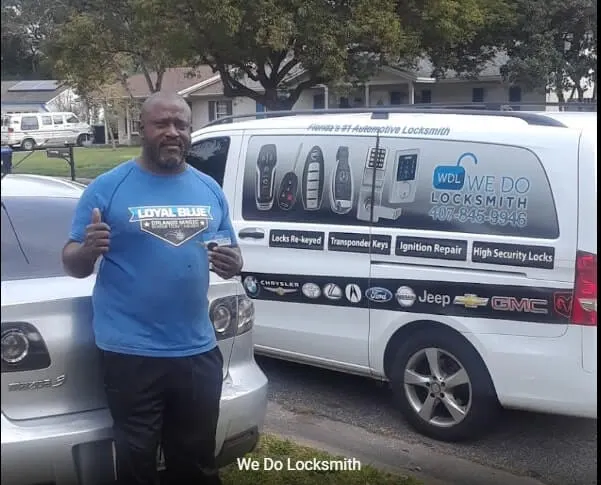
Home security
Moving to Jacksonville on Military Orders: A Lock and Key Checklist
PCS to NAS Jax, Mayport or Blount Island? Who rekeys base housing, rentals and a home you buy, plus deployment and move-out keys.
October 11, 2026 · 11 min read
Read the guide


Locked out in Jacksonville? Talk to a person, not a call center.
Tell us where you are and what you drive or which door it is. The estimate on the phone is free, and a technician comes in a marked We Do Locksmith vehicle.